The Ultimate Camping Checklist for a UK Summer Weekend
A practical packing list for a UK summer camping weekend, covering shelter, sleep, cooking, clothing and...

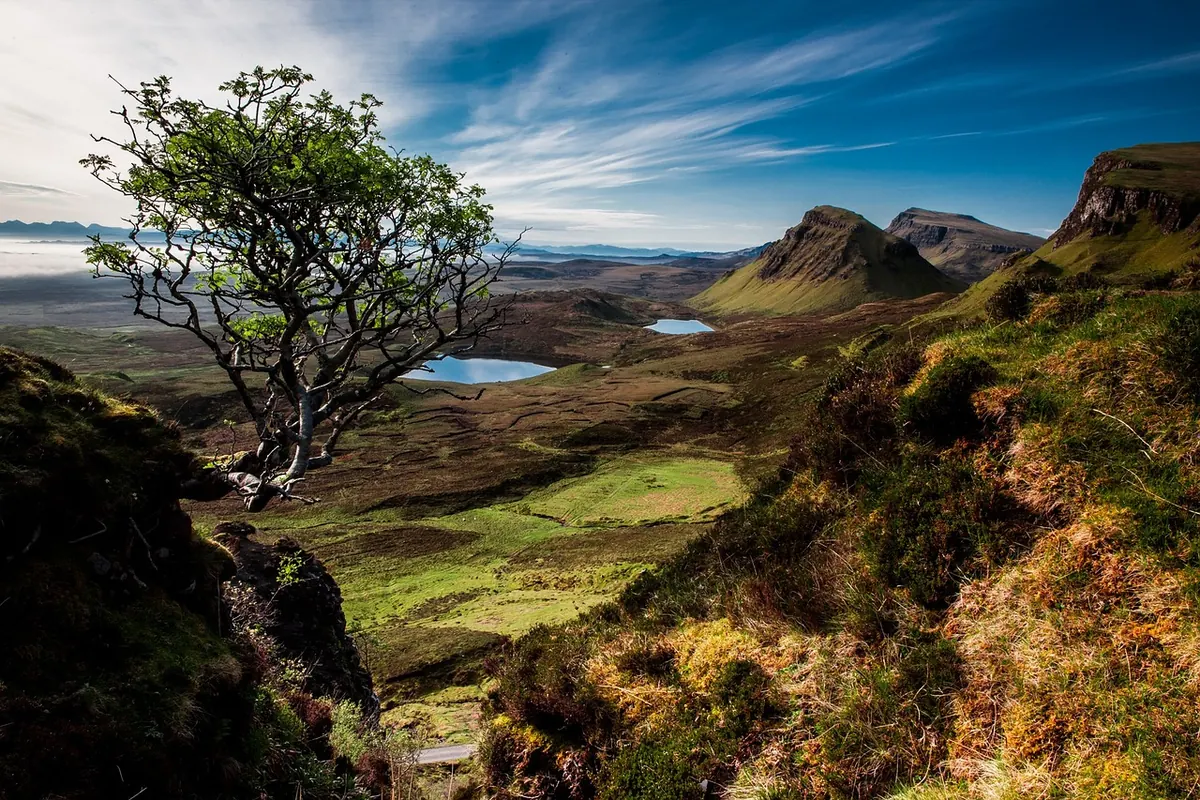
Ask anyone who lives on Skye where they walk and you tend to get the same answer: the famous places, but at hours the guidebooks don't mention. The headline routes genuinely earn their reputation. They're also the reason the car parks at the north end of Trotternish can be full before nine in the morning in July.
Timing, weather and a willingness to walk ten minutes further than everyone else will do more for your day than any list of secret spots. What follows runs roughly north to south, with honest notes on difficulty, what you'll actually see, and how to have it mostly to yourself.
The path leaves a car park on the A855 about seven miles north of Portree, climbing through a conifer plantation before breaking out onto open hillside below the pinnacles. Allow an hour and a half to two hours for the return trip. The track is well worn and occasionally eroded, with a few steep pulls. Trainers will manage in dry weather; boots are better, particularly after rain.
Coaches arrive between about 10am and 4pm. Go before eight or after six and you'll share the hill with a handful of photographers and the occasional deer. On a summer evening the low western light lands right on the Old Man, which is when the place looks its best anyway.
For a quieter approach, park at the Loch Leum na Luirginn layby to the north and come up from behind. It's rougher underfoot and the line is less obvious in cloud, but you'll see the ridge from an angle most visitors never bother with. Watch where you tread: the Trotternish slopes are badly eroded, and the soil here took thousands of years to form.
If you only have time for one proper walk, make it this. The circuit from the car park at the top of the single-track road above Uig is roughly six and a half kilometres and takes two to three hours at a steady pace, with a couple of sections where you'll want your hands free.
The path traces the edge of a landslip landscape: the Needle, a thin blade of rock; the Prison, a wall of cliff; and the Table, a flat green shelf where sheep graze as if nothing unusual is going on. The views north along the Trotternish ridge and across the sound to the mainland are why people come back year after year.
Two things worth knowing. The ground holds water, so after heavy rain the descent through the wooded gully at the northern end turns into a mud slide — waterproof boots and a bit of patience are not optional. And the single-track road in has passing places, while the car park itself fills quickly. Arriving before nine is the simple fix. A late afternoon start works just as well and gives you long shadows across the whole ridge.
Walk the circuit anticlockwise if you'd rather climb the steep ground than descend it.
The Fairy Pools sit at the foot of the Cuillin, and they are as good as the photographs suggest: a chain of clear pools and small falls on the River Brittle with the dark gabbro peaks behind. They're also one of the busiest spots on the island, on a path short enough that people turn up in flip-flops.
It's a little over a mile each way on a decent track, with stepping stones at the crossings. If the river is in spate, don't push it — the stones disappear under fast, cold water. Past the main pools the crowds thin out sharply, so keep walking.
For a quieter day, carry on up the glen or head for Glenbrittle beach instead. The walk along the shore towards Rubha an Dùnain is gentle and often empty. If you fancy a dip, cold water shock is real even in summer: go in gradually, never alone, and save it for a settled, warm day.
The Cuillin are a different proposition from anything else on Skye. Coire Lagan, reached from Glen Brittle, is a rough walk of around four hours return to a black lochan ringed by towering walls; the last stretch to the water involves hands-on scrambling. Bruach na Frithe from Sligachan is a full day out, five to six hours for most parties, with a rocky, exposed final section.
The Inaccessible Pinnacle and the rest of the main ridge traverse are mountaineering days, not walks. They need rock-climbing experience, a rope and, realistically, a qualified guide. There is no shame in that — plenty of experienced hillwalkers book one.
Whatever you're doing, leave a note of your route and expected return time with someone. Mobile signal is patchy or absent in most glens. In an emergency, dial 999 and ask for Mountain Rescue, or the Coastguard for anything on the coast.
Away from the big three, Skye has plenty of shorter days that rarely feel busy:
Skye weather changes fast, and a fine morning says nothing about the afternoon. Check a hill forecast before you set off and again at lunchtime, and be ready to turn back.
None of this is complicated, but it's the difference between a memorable day and a miserable one. Skye rewards a bit of planning more than most places — and if you're on the hill early, with the light coming sideways across the ridge, you'll understand why so many people never quite manage to leave.
Photo: FrankyFromGermany / Pixabay
A practical packing list for a UK summer camping weekend, covering shelter, sleep, cooking, clothing and...
A practical beginner's guide to reading Ordnance Survey maps and using a baseplate compass, covering...
A season-by-season guide to wild swimming in the Lake District, covering realistic water temperatures, the...